In this guide
- Start with
- Xiaomian for breakfast, dumplings or rice dishes for lunch, hotpot for a shared dinner.
- Core flavors
- Chile, Sichuan pepper, fermented seasonings, garlic, ginger and rich meat or vegetable broths.
- Useful phrase
- 微辣 (wēilà) means mildly spicy; 不辣 (bù là) means not spicy.
- Dietary needs
- Carry a written Chinese card for allergies or strict diets. Broths and sauces can contain meat, peanuts, sesame or soy.
- Where to eat
- Busy neighborhood shops, food streets and shopping districts; a famous name is not required.
- Watch for
- Sichuan pepper is numbing, not just hot; chile oil and fresh chile are separate heat sources.
Start with everyday food
Chongqing cooking is known for chile, Sichuan pepper and deeply savory flavors, but the city's food is broader than a single level of heat. Small noodle shops, dumplings, rice dishes, tofu and vegetable sides make good entry points. The everyday city eats early, eats quickly at lunch and gathers around a shared pot in the evening.
Busy local restaurants can be quick and direct. Look at what others are ordering, use pictures where available and have a translation ready. A short menu with a few specialties is often a better sign than a long menu in several languages.
Xiaomian and morning bowls
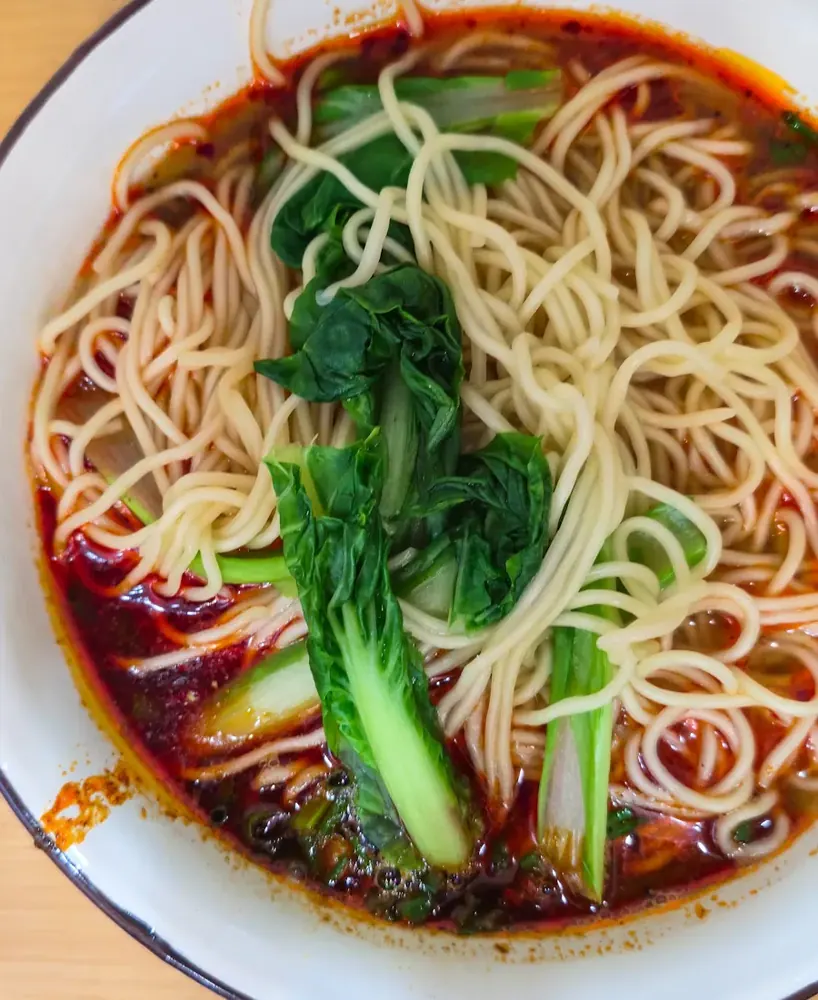
Chongqing xiaomian (重庆小面) is a defining breakfast and everyday meal: wheat noodles tossed or served with a seasoned base that may include chile oil, Sichuan pepper, preserved vegetables, garlic, ginger and aromatics. Toppings vary by shop; minced pork, beef, peas or a fried egg are common. The noodles are usually served in a small bowl, with the seasoning at the bottom and the noodles on top.
Mix the noodles before eating so the seasoning is evenly distributed. Ask for less chile if needed, but remember that the numbing pepper and the chile oil are separate parts of the flavor. A bowl of noodles is a good first meal in the city: inexpensive, quick and easy to find.
Sharing a hotpot
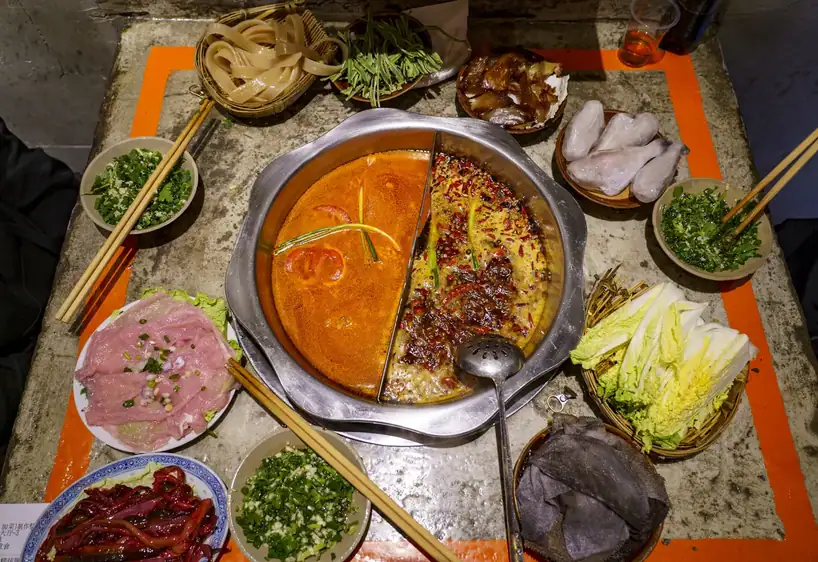
Chongqing hotpot is social and unhurried. Ingredients arrive raw for the table to cook in a bubbling broth. A divided pot lets a group choose different heat levels; ask whether one is available rather than assuming. The broth is usually beef tallow or oil-based and can be very spicy, with a separate milder section if you request it.
Order a few dishes first and add more later. Common choices include thinly sliced beef or lamb, tripe, duck intestine, meatballs, fish, potato, lotus root, tofu skin, mushrooms and leafy greens. Cooking times vary; ask staff if you are unsure. Use the utensils provided for raw food and do not put cooked food back on a plate that held raw meat.
- Cook raw items thoroughly, especially poultry, pork and seafood.
- Use a separate bowl for dipping sauce, not the cooking broth.
- Ask for a milder pot or a divided pot if the group has mixed preferences.
- Keep the table clear and follow staff instructions for the induction hob or gas burner.
Representative dishes
The following dishes are widely associated with Chongqing or the wider Sichuan-Chongqing culinary region. Recipes and heat levels vary by restaurant, so treat the table as a starting point rather than a fixed specification.
| Dish | Chinese | What it is | Heat | Notes |
|---|---|---|---|---|
| Xiaomian | 小面 | Wheat noodles with chile oil, Sichuan pepper and seasonings | Medium to high | A breakfast and all-day staple; ask for less chile |
| Hotpot | 火锅 | A shared pot of bubbling broth with raw ingredients | High | Order a divided pot for mixed groups; cook items thoroughly |
| Suancai yu | 酸菜鱼 | Fish with pickled mustard greens in a tangy broth | Medium | Often shared; ask about bones and fish type |
| Maoxuewang | 毛血旺 | Duck blood, offal and vegetables in a spicy broth | High | Adventurous; ask what is in the bowl if you have dietary limits |
| Laziji | 辣子鸡 | Fried chicken with a large quantity of dried chiles | Medium to high | Gele Mountain style is well known; pick around the chiles |
| Douhua fan | 豆花饭 | Soft tofu with rice and a dipping sauce | Low to medium | A simple everyday meal; sauce heat varies |
| Chaoshou | 抄手 | Wontons in soup or chile oil | Low to medium | A good mild option; ask for no chile oil if needed |
Ordering and spice preferences
Pointing at a photo menu is normal. If you have a phone translation app, type the phrase and show the screen. Keep the Chinese characters visible; pronunciation alone can be ambiguous in a noisy restaurant.
| English | Chinese | Pinyin | What it does |
|---|---|---|---|
| Mildly spicy | 微辣 | wēilà | Asks for less chile, though the base may still be seasoned |
| Not spicy | 不辣 | bù là | Asks for no chile; confirm whether the broth or sauce is already prepared |
| Use less chile | 少放辣椒 | shǎo fàng làjiāo | A more specific request than “mild” |
| No Sichuan pepper | 不要花椒 | bú yào huājiāo | Removes the numbing element |
| No cilantro | 不要香菜 | bú yào xiāngcài | Useful if you dislike the herb |
| I am allergic to… | 我对……过敏 | wǒ duì … guòmǐn | Name the ingredient clearly; show it in writing |
| Vegetarian | 素食 | sùshí | Ask about broth, lard and shared utensils as well |
| The bill, please | 买单 | mǎidān | Ask for the bill |
A request may not remove flavor already present in a prepared sauce or broth. If the answer is uncertain, choose a dish that is assembled to order, such as noodles or a simple stir-fry, rather than a long-simmered pot.
Allergies, vegetarian food and dietary communication
For allergies or strict dietary needs, carry a written Chinese statement naming the ingredient and the risk. Do not rely on the English word alone. Ask staff to check with the kitchen, and accept that cross-contact is possible in a busy restaurant. This guide cannot guarantee that any dish is free from a particular ingredient.
- Peanuts and sesame — common in sauces, cold dishes and hotpot dipping sauces.
- Soy and gluten — soy sauce, tofu skin, noodles and many marinades.
- Meat and animal fat — hotpot broth, lard and stock may be used in vegetable dishes.
- Seafood — fish, shrimp and shellfish appear in shared dishes and hotpot.
- Vegetarian and vegan — ask separately about broth, lard, oyster sauce and shared cooking utensils.
- Halal — look for a clearly marked halal restaurant rather than assuming a dish is halal.
Where to eat
You do not need a famous restaurant. Busy neighborhood shops, food streets, shopping-district restaurants and convenience stores all have a role. A place with a short menu, high turnover and local customers is often a good bet. In visitor areas, prices and queues can rise; walk one or two streets away for a calmer meal.
- Jiefangbei and the peninsula — the widest choice, from noodles to hotpot, with many visitor-oriented restaurants. The Jiefangbei area guide explains what staying here is like.
- Guanyinqiao — a modern commercial area with shopping-mall dining and street food.
- Shapingba and Ciqikou — old-town snacks, noodles and teahouses; the main street is busy, the back lanes calmer.
- Nan'an and Nanbin Road — riverside restaurants and a slower evening; check the exact block and the walk from the station.
Hygiene standards vary. Choose busy places, avoid food that has been sitting out, and drink bottled or boiled water if you are unsure. This guide does not publish restaurant rankings, prices or sponsored recommendations.
Eat with the rhythm of the city
Try noodles early, plan a lighter lunch on steep walking days, and give hotpot an unrushed evening. Markets and food streets can be enjoyable for browsing, but a famous cluster is not required for a good meal. Neighborhood restaurants are part of the experience.
Tea is a good pause in the afternoon, especially in Ciqikou or a teahouse near the river. Baijiu is common at celebratory meals; there is no obligation to drink, and a polite refusal is fine. Carry water, especially in summer, and do not schedule a heavy hotpot lunch before a long afternoon of walking.