In this guide
- Suggested stay
- Three full days for a first visit; four or five for a slower pace.
- Core areas
- Yuzhong peninsula, Jiangbei, Nan'an and the western districts.
- Getting around
- Metro for long crossings, walking for neighborhoods, taxis for steep or late routes.
- Money
- Mobile payment is common. Carry a bank card and some cash as backups.
- Language
- Mandarin, with a local Chongqing dialect. English is limited outside visitor areas.
- Weather
- Hot, humid summers; cool, damp winters; spring and autumn are usually the most comfortable.
Read the city through its rivers
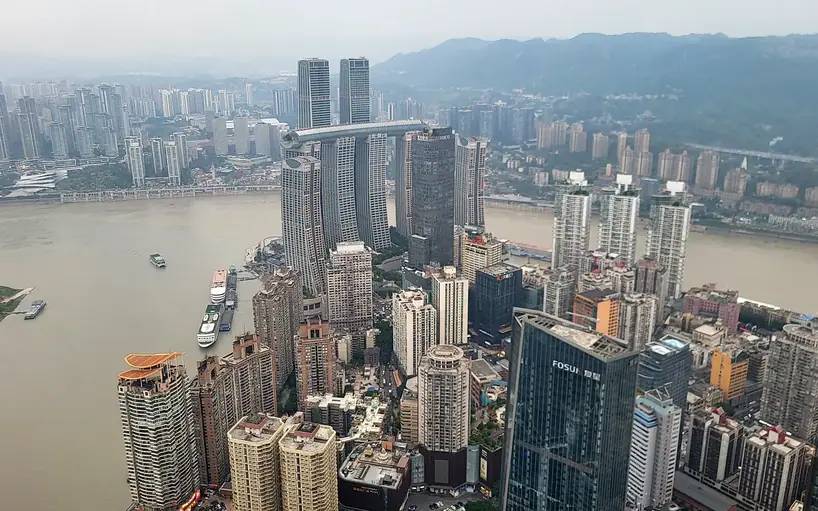
Central Chongqing is shaped by the meeting of the Yangtze and Jialing rivers. The Yuzhong peninsula holds Jiefangbei, Chaotianmen, Hongyadong and many familiar skyline views. Jiangbei lies north across the Jialing, while Nan'an faces Yuzhong from the south bank.
A place that looks close across the water may require a bridge, a metro crossing or a long detour. Plan by riverbank and neighborhood rather than by straight-line distance. The area guide compares the main visitor bases, and the transport guide explains how the metro and the terrain fit together.
The four names worth knowing first
- Yuzhong — the central peninsula between the two rivers. Most first-visit sights are here or just across the water.
- Jiangbei — north of the Jialing. Guanyinqiao is its best-known commercial and dining area.
- Nan'an — the south bank, with riverside walks, the cableway's southern station and viewpoints back toward Yuzhong.
- Shapingba — a western district with a major railway station, Ciqikou old town and a large student population.
The city is built over ridges, so a neighborhood can have several street levels. A hotel entrance, a metro exit and a riverside road may all sit at different heights. That is normal here, not a sign that you are lost.
How long to allow
Three full days give a first-time visitor room for the central peninsula, a neighborhood beyond it, riverside views and a slower meal. Add time if you want a day trip, photography at both dawn and dusk, or generous rest between steep routes.
| Time | What it gives you | What to expect |
|---|---|---|
| Two full days | The central peninsula, one river crossing and a good meal | A useful taste of the city, but little room for weather changes or a slower neighborhood day |
| Three full days | Yuzhong, a western or northern neighborhood, and the south bank | The most comfortable first visit for most travelers |
| Four to five days | More walking, a day trip, museums and repeat visits to favorite areas | A slower rhythm, with space for heat, rain or a closed attraction |
Build one quiet period into each day. Heat, humidity, stairs and busy interchanges can make a packed plan tiring. A late start, a long lunch or an afternoon indoors is not wasted time in Chongqing; it is part of how the city works.
Prepare before arrival
Save your accommodation name and address in Chinese, plus a map pin. Install any map, translation, payment and transport tools you intend to use before travel, then confirm that they work on your connection. A screenshot of the address is more reliable than a bookmark when the signal is poor.
- Keep an offline copy of key addresses and station names.
- Carry a physical bank card and a modest cash fallback.
- Save the Chinese names of your hotel, the nearest station and one or two backup restaurants.
- Check the forecast for both heat and rain, and bring shoes you can walk in for hours.
- Pack a light rain layer and a refillable water bottle; you will refill it often.
- Tell your bank you are traveling if it requires a notification.
Entry rules, payment support and app availability can change. Check current guidance through official channels close to departure. The National Immigration Administration publishes entry and visa information; your nearest Chinese embassy or consulate can confirm your own case.
Arriving by air or train
Chongqing Jiangbei International Airport (CKG) has two main terminal areas used by international and domestic flights. Metro Line 10 serves Terminal 3 and Terminal 2; Line 3 serves Terminal 2. Terminal shuttles, taxis and ride-hailing are also available. Check the airport's official site for the current terminal and transport details before you fly.
The city has several mainline railway stations, including Chongqing North, Chongqing West, Chongqing East and Shapingba. A 12306 search for “Chongqing” can return trains from more than one station, so confirm the station printed on your ticket. Chongqing Station (Caiyuanba) closed to passengers in 2022 and is being rebuilt, so it is not a passenger option for current trips; confirm future station information on 12306.
Buy rail tickets through China Railway 12306 or its official app. Have your passport and booking details ready, and save the station name in Chinese. Allow extra time at large stations for security checks, finding the correct waiting area and the walk to the platform.
Payments and connectivity
Mobile payment is widespread in Chongqing. Alipay and WeChat Pay are the two common options, and both publish guidance for international visitors who want to link an overseas bank card. Setup can involve passport verification and can vary by provider, card issuer and app version. Complete the setup before you rely on it, and keep a second payment method available.
Cash in renminbi is still legal tender, but small vendors may be more accustomed to mobile payment. A physical bank card is useful at larger hotels, shops and ATMs. Fees, transaction limits and card support can change, so check the current terms in the app and with your bank rather than relying on an old guide.
- Alipay international — setup guidance for overseas users.
- WeChat Pay — official information for international card users.
Data and apps
Compare roaming, a travel eSIM and a local SIM based on your device, trip length and access needs. Public Wi-Fi exists in some cafes, hotels and stations, but it should not be your only plan. A local number can make restaurant reservations, ride-hailing and delivery apps easier, but it is not essential for a short visit.
Google Maps data and routing can be unreliable in mainland China. Use a map app designed for China, such as Amap (Gaode), and save pins offline. Some international apps and services may be unavailable or slow; decide what you need before you travel and follow local rules.
Weather, seasons and packing
Chongqing has a humid subtropical climate. Summers are hot and humid, winters are cool and damp, and fog or low cloud can hide the skyline at any time of year. Spring and autumn are generally the most comfortable seasons for walking, though rain is possible throughout the year.
| Season | Typical feel | What it means for a visit |
|---|---|---|
| Spring (March–May) | Mild and often damp | Good walking weather; bring a light rain layer and expect changing visibility |
| Summer (June–August) | Hot, humid and sometimes stormy | Start early, plan indoor breaks and keep evenings for river views |
| Autumn (September–November) | Cooler and often clearer | Generally comfortable for long walking days and skyline views |
| Winter (December–February) | Cool, damp and often overcast | Fewer crowds; pack layers and do not count on a clear panorama |
Check the forecast close to travel with the China Meteorological Administration or a reliable local weather service. In summer, carry water and plan around the hottest part of the day. In winter, a windproof layer matters more than a heavy coat. Comfortable shoes with grip are useful in every season.
Everyday practical basics
Hotel staff can help write a destination for a driver. In restaurants, a photo menu or pointing is common, but dietary needs should be written clearly in Chinese. Tap water should not be assumed to be ready to drink; use water provided for drinking or bottled water. Many hotels provide a kettle, but check the local advice at your property.
Public toilets, station exits and building entrances may sit on different levels. Look for signs, ask staff, and allow time to reorient. Carry tissues and hand sanitizer; not every public toilet supplies paper. Tipping is not customary in most everyday situations.
Useful numbers and habits
- 110 — police; 120 — ambulance; 119 — fire.
- Electricity is 220 V at 50 Hz. Plug types vary; a universal adapter is useful.
- Stand to the right on escalators where local signage asks, and let passengers leave trains before boarding.
- Do not block metro doors, platforms or narrow lanes for photographs. The elevated rail is working transport, not a ride.
- Ask before photographing people, especially in markets, temples and residential lanes.
Accessibility varies by station, exit, building and venue. Lifts and step-free routes exist in many places, but not everywhere. If you have mobility needs, check the actual station exit and venue entrance rather than relying on a general neighborhood description.
Common practical questions
Is Chongqing walkable?
Yes, in compact areas, but the walking is often steep. Use the metro for long crossings and choose one neighborhood at a time. A route that looks short on a map may include stairs, an underpass or a change of level.
Is English widely spoken?
English is limited outside hotels, major visitor sites and some restaurants. Save Chinese place names, use a translation app and keep a screenshot of your address. Staff are often helpful even when the conversation is mostly pointing and gestures.
Can I use Google Maps?
Google Maps data and routing can be unreliable in mainland China. Use Amap (Gaode) or another map app designed for China, and save offline pins. Apple Maps may work for some users, but check before you depend on it.
Do I need cash?
Not for most purchases, but carry some renminbi as a backup. Mobile payment is common; a bank card and a small amount of cash cover the gaps. Do not assume every small vendor accepts an overseas card directly.
How many days do I need?
Three full days is a comfortable first visit. Two days can cover the central peninsula and one river crossing; four or five days allow a slower pace, a museum and a day trip.
Is the city safe?
Chongqing is a large city with the usual urban precautions. Watch your belongings in crowds, use licensed taxis or ride-hailing apps, and avoid unlit steep shortcuts at night. This guide cannot guarantee safety; use your own judgment.
Why does the metro seem to go through buildings?
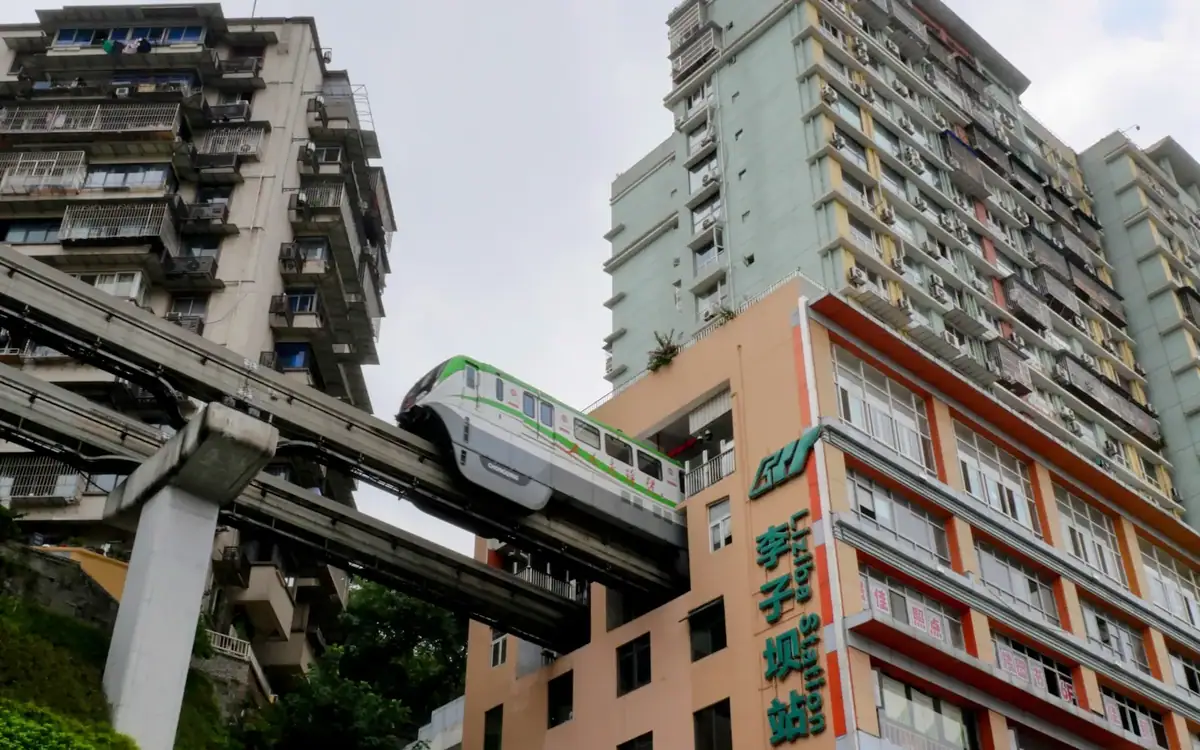
Chongqing's terrain forces transport into unusual shapes. Liziba Station on Line 2 is the best-known example: the monorail passes through a residential building. It is a working station, so keep doorways and platforms clear.
What should I do if it rains?
Move a skyline viewpoint to another evening and use the day for a museum, a long lunch, a teahouse or a covered market. Low cloud is common; a flexible plan is more useful than a fixed checklist.