In this guide
- Chinese name
- 洪崖洞 — save it in your map app before leaving.
- Area
- Yuzhong, beside the Jialing River.
- Metro options
- Xiaoshizi on Lines 1 and 6; Linjiangmen on Line 2.
- Suggested pace
- Keep an evening flexible, with time for a viewpoint, a meal and the return trip.
What to expect at Hongyadong
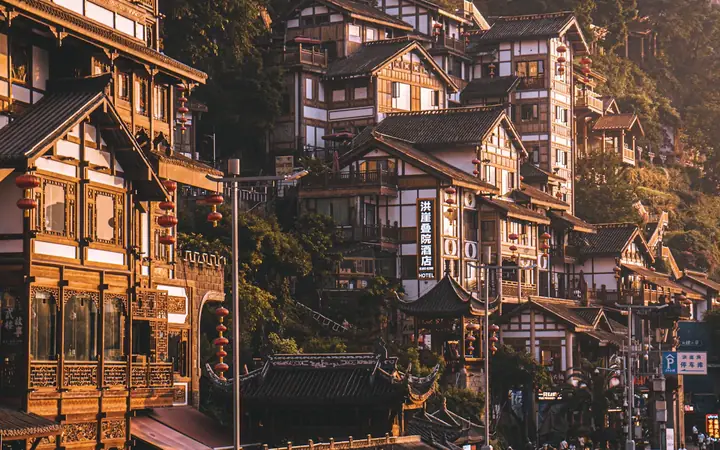
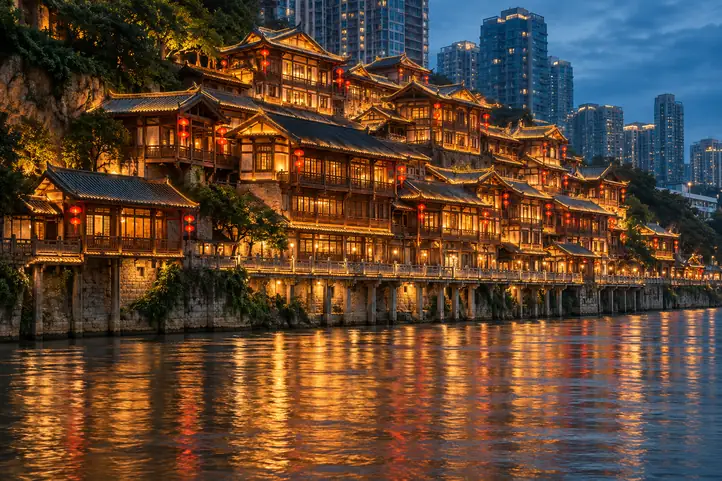
Hongyadong, also called Hongya Cave, is a hillside sightseeing and shopping complex in central Chongqing. Its traditional-style buildings step down toward the Jialing River, making the contrast between streets, terraces and the riverfront part of the attraction. The municipal tourism department lists its address as 88 Jialingjiang Binjiang Road in Yuzhong, according to its official attraction profile.
The name can be misleading: plan for a built-up visitor area, rather than an underground cave excursion. There are two different experiences to consider: walking through the complex and standing outside it to appreciate the whole facade. Decide which matters more to you before committing to a queue or a change of level.
If this is your first evening in the city, make Hongyadong the main focus instead of one stop in a long list. A relaxed visit with one view and dinner is a better planning starting point than an itinerary that depends on several tight connections.
How to get to Hongyadong
Xiaoshizi (小什字) serves Lines 1 and 6; Linjiangmen (临江门) serves Line 2. Both are listed as approaches in the municipal government's Hongyadong guide. Choose the station that fits your starting point, then check the final walking route and the exit signs on arrival.
Save both the attraction's Chinese name and your accommodation address. A map pin alone does not explain which entrance or street level you need. If you are meeting someone, agree on a named entrance or a visible landmark rather than simply saying “outside Hongyadong.”
For a taxi or ride-hailing trip, check the pickup or drop-off location in the app and be prepared to walk the last part. Do not build the evening around a vehicle stopping at one exact doorway. For more on stations, exits and return journeys, use our Chongqing transport guide.
Choose the view before choosing the route
A close look at the terraces and a wide view of the buildings serve different purposes. Pick your priority first, then add a second viewpoint only if the walking route and crowd conditions make it comfortable.
| Priority | What to look for | Planning tradeoff |
|---|---|---|
| Architectural detail | An open public area near the lower facade | You see textures and layers, but the whole complex may not fit in a close photograph. |
| Buildings with the river setting | A permitted pedestrian viewpoint around Qiansimen Bridge | Check the current pedestrian approach and keep moving if the walkway is crowded. |
| The atmosphere inside | The complex's visitor lanes and terraces | Allow for internal circulation rather than expecting the same view as an exterior photograph. |
A municipal report on Qiansimen Bridge's pedestrian improvements describes connections between the bridge and the Hongyadong side. Treat this as background, not a guarantee that every connection is open on your visit date. Follow current signs and staff directions.
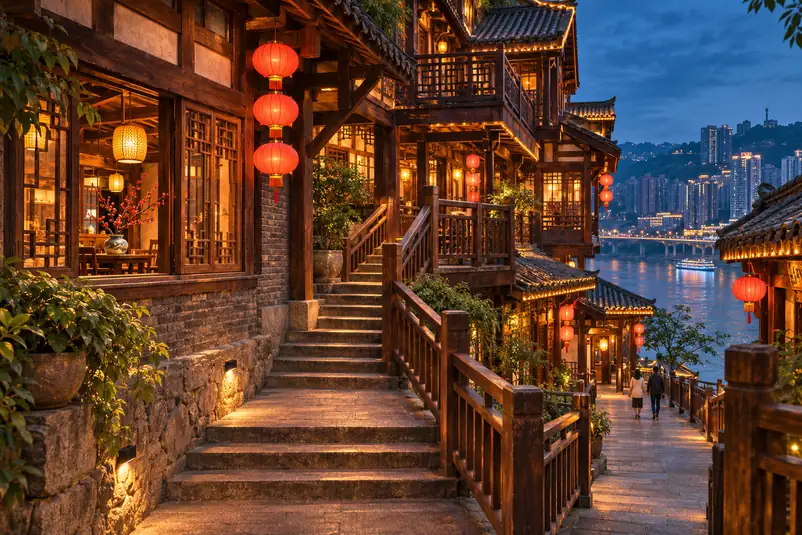
For photographs, try one wider frame that includes the surroundings and one closer detail. Keep tripods, bags and stopping groups out of the walking line. A slightly different angle is preferable to standing somewhere that blocks others.
Daylight, dusk or after dark
Daylight is useful if you want to understand the building layout and surrounding streets. Dusk offers a transition between the city and its evening lights; after dark puts more emphasis on the illuminated facade. These are different visual choices rather than a single correct time to visit.
For an evening visit, my planning suggestion is to arrive before your preferred viewing time, identify the return route and leave space for a pause. If the light or visibility disappoints, switch the emphasis to food or the nearby streets instead of waiting indefinitely for a particular photograph.
A flexible evening around the riverfront
Use this as a sequence of decisions, not a timed tour. The aim is to enjoy one part of the city without repeatedly climbing between street levels.
- Choose an arrival side. Check the station exit and the entrance level before setting off. Save the route back while you still have time to look at the map calmly.
- Find your first viewpoint. Start with an open pedestrian area that lets you understand the buildings. If it is uncomfortable to stop, keep walking and reassess rather than joining a bottleneck.
- Choose either internal exploring or another exterior view. You do not need to cover every level. Let your energy, the weather and the available pedestrian route decide.
- Take a proper meal break. Decide whether dinner belongs before or after the view. Avoid making a reserved meal depend on a sightseeing queue clearing at exactly the right moment.
- Leave by the route that is working. Recheck the station or pickup point rather than assuming the arrival route is still the easiest way out.
Do not assume there is an uninterrupted riverside walk onward to Chaotianmen. A December 2025 municipal opening notice recorded construction-related exceptions around Hongyadong. Check the current walking route before choosing an onward riverfront walk.
For a wider day combining central sights with a single evening view, see day one of the three-day itinerary.
Steps, crowds and changing levels
The upper and lower approaches are not interchangeable. Hongyadong has a riverside approach below and Cangbai Road above. When planning, think in terms of street level as well as distance.
If stairs are difficult for anyone in your group, confirm the exact lift or step-free route for the entrance you intend to use. Do not assume an available lift solves the entire journey from the metro to the viewpoint. Ask your accommodation or the attraction for current access advice before leaving.
- Wear shoes with grip and allow extra care on wet steps.
- Agree on a meeting point before separating for photographs.
- Keep stairs, shop entrances and pedestrian crossings clear.
- Leave room in the plan to turn back without missing a fixed booking.
Food and nearby plans
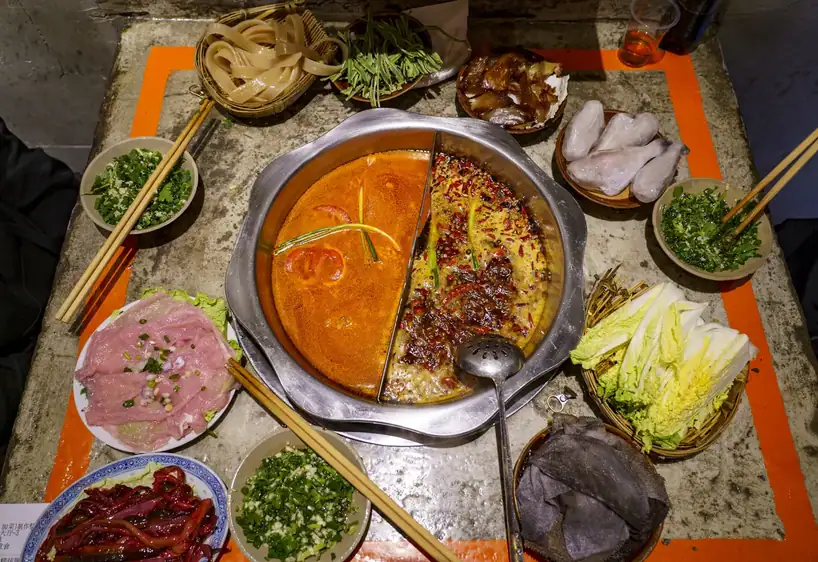
Treat dinner as part of the evening rather than something to squeeze into the gaps. If you choose hotpot, allow time for ordering and a shared meal; if you want a shorter stop, a simple bowl of noodles can keep the focus on walking and views. Our food guide explains dishes, heat preferences and useful ordering language.
If you want to explore farther, use the central-city itinerary to choose one additional area. Add it because you want more walking, not because the map makes it appear effortless. Check the route and changes of level before committing.
Questions before your visit
Do I need a ticket?
Published district tourism guidance from June 2023 describes Hongyadong as a free scenic area and advises using the official attraction channel for reservations. Because that notice is older, confirm today's entry and booking requirements. Separate tours, meals, performances and other paid offers should not be confused with general attraction access.
How long should I allow?
There is no useful one-size-fits-all visit length. For planning, leave an evening with room for a view, internal walking if you want it, a meal and your return journey. Cut a viewpoint before you cut the time needed to move comfortably.
Is the whole area step-free?
This guide does not certify a complete step-free route. Confirm the arrival street, entrance, lifts and viewing location for your circumstances. Choose fewer changes of level if that makes the visit easier.
Sources and further reading
- Chongqing Culture and Tourism Development Commission — attraction profile
- Chongqing municipal government — Hongyadong and transport approaches
- Chongqing municipal government — bridge pedestrian connections
- Chongqing municipal government — riverside walkway notice, December 2025
- Yuzhong tourism guidance — attraction access advice, June 2023